
From predictive analytics that forecast demand to recommendation engines that boost revenue — we integrate production-ready ML models into your existing applications and workflows.

AI/ML integration is the process of taking your raw business data and transforming it into actionable intelligence through machine learning models that are embedded directly into your applications, dashboards, and decision-making workflows. It is about making your existing systems smarter, not replacing them.
Unlike standalone AI tools that operate in isolation, our approach focuses on deep integration into your existing tech stack. Whether it is your CRM predicting customer churn, your e-commerce platform recommending products in real time, or your operations dashboard flagging anomalies before they cause downtime — every ML model we build is designed to work within the systems your team already uses.
As India's leading AI integration agency, Decipher brings 12+ years of operational expertise to ensure that every model we deploy is not just accurate in testing but reliable in production. We handle the entire lifecycle: from data preparation and feature engineering to model training, deployment, monitoring, and continuous retraining.
From forecasting demand to detecting fraud in real time, our ML services span the full spectrum of business intelligence. Every model is built for production, not just proof-of-concept.
Demand forecasting, revenue prediction, churn analysis, and lead scoring. We turn your historical data into future insights that drive smarter business decisions and resource allocation. Our predictive models consistently achieve 85%+ accuracy in production environments across Indian enterprises.
Product recommendations, content personalization, and next-best-action systems. Increase engagement and conversion rates with intelligent suggestions powered by collaborative filtering, content-based models, and hybrid approaches tailored to your user base.
Image recognition, object detection, quality inspection, OCR, and facial recognition. Process visual data at scale with deep learning models that bring automation to manufacturing floors, security systems, and document processing workflows.
Text classification, entity extraction, sentiment analysis, and language translation. Understand unstructured text data from customer reviews, support tickets, social media, and documents — turning raw text into structured, actionable intelligence.
Fraud detection, system anomaly identification, and outlier analysis. Catch issues before they become costly problems with ML models that continuously learn what “normal” looks like and alert you the moment something deviates.
End-to-end ML pipelines, model versioning, automated retraining, monitoring, and deployment infrastructure. We build the operational backbone that keeps your ML models running reliably in production with zero manual intervention.
Every machine learning project at Decipher follows a structured, battle-tested pipeline that ensures models are not just accurate in testing but performant and reliable in production.
We connect to your databases, APIs, event streams, and third-party sources to aggregate the raw data your ML models will learn from. Structured and unstructured data, all in one pipeline.
Missing values, outliers, and inconsistencies are handled. We engineer meaningful features that give your models the signal they need to make accurate predictions.
We train and compare multiple algorithms, tuning hyperparameters and evaluating performance across metrics that matter for your specific business problem.
Rigorous cross-validation, holdout testing, and A/B comparisons ensure model accuracy is robust and not just a product of overfitting to training data.
Models are containerized and deployed via REST APIs, batch jobs, or streaming pipelines — integrated directly into your application layer with zero disruption.
Continuous performance monitoring detects data drift and accuracy degradation. Automated retraining pipelines ensure your models stay sharp as your data evolves.
We use best-in-class frameworks, platforms, and tools across the entire machine learning lifecycle — from data engineering to model deployment and monitoring.
Machine learning is not a one-size-fits-all solution. We build industry-specific models that solve real business problems and deliver measurable ROI for Indian enterprises.

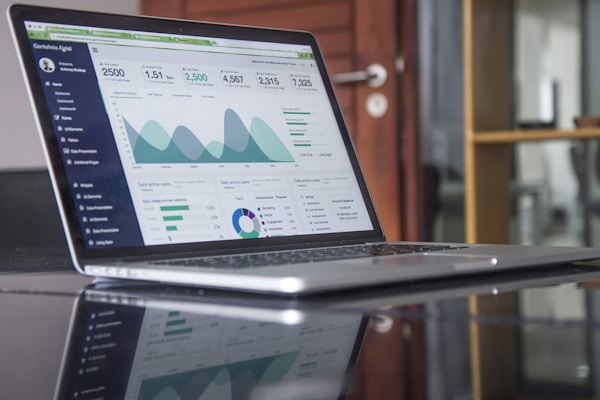

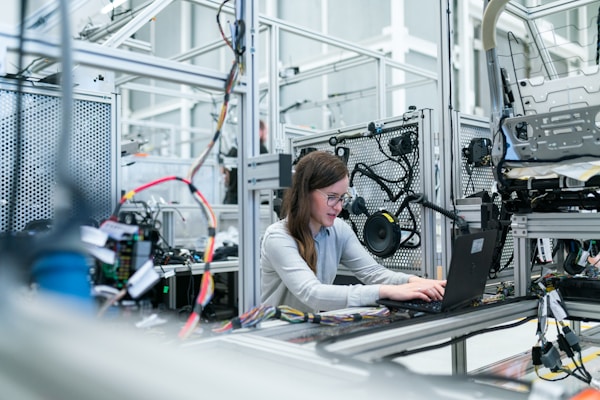
Machine learning is not just something we build for clients — it is embedded into how Decipher operates. Our own monitoring and operations infrastructure is powered by ML models that improve response times, predict issues, and optimize delivery.
Our ML models continuously learn the baseline behavior of your applications — response times, error rates, traffic patterns — and trigger alerts the moment something deviates, often minutes before a human would notice.
Predictive models analyze CPU, memory, disk I/O, and network utilization trends to forecast when your servers will hit capacity — enabling proactive scaling instead of reactive firefighting.
ML optimizes SMS, OTP, and WhatsApp delivery by predicting the best sending windows, routing through highest-performing gateways, and automatically switching providers when deliverability drops.
Our security monitoring uses pattern recognition models trained on millions of events to distinguish between legitimate traffic and potential threats — reducing false positives by 70% and catching zero-day patterns.
A structured, transparent engagement model that takes your ML project from initial assessment to production deployment and ongoing optimization.
We audit your existing data sources, evaluate data quality, identify gaps, and determine which ML use cases will deliver the highest ROI for your business. This includes a feasibility study and expected accuracy benchmarks.
Our ML engineers build, train, and validate models using your data. We iterate rapidly, comparing multiple approaches and algorithms to find the best-performing solution for your specific problem.
Models are deployed into your production environment via APIs, microservices, or embedded pipelines. We handle infrastructure, containerization, load testing, and rollout strategy.
Post-deployment, we continuously monitor model performance, detect data drift, and trigger automated retraining. Monthly reports track accuracy, latency, and business impact metrics.
These are not lab results. These are real outcomes from ML models we have deployed and maintained for businesses across India.
An e-commerce client saw a 35% uplift in conversion rates after we deployed a real-time product recommendation engine powered by collaborative filtering and deep learning models.
ML-powered monitoring reduced mean-time-to-detection by 60% for a SaaS platform, catching performance degradation and security anomalies minutes before they impacted end users.
Predictive scaling models we built for a high-traffic platform reduced cloud infrastructure costs by 40% by right-sizing instances and predicting traffic spikes before they happened.
Common questions businesses ask before starting an ML integration project with Decipher.